An Honest Guide for Pool Builders, Service Companies & Landscapers
Reading time: 6-8 minutes
TLDR
TLDR
What You Actually Need
Local SEO is not “just do SEO” or “write some blogs.” It’s four controllable signals working together: your Google Business Profile (GBP), ongoing review flow, location‑specific website content, and clean NAP citations. When those are aligned, Google can confidently show you in Maps and local search; when one or two are missing, results stall no matter how much you spend.
What typically drives visibility:
- Google Business Profile engagement
- Steady, recent reviews with relevant keywords
- City and service‑specific website pages
- Consistent Name, Address, Phone (NAP) across the web
What to expect over time:
- Early movement: 1–3 months (impressions, some rankings)
- Meaningful traction: 3–6 months (Map Pack appearances, more leads)
- Strong positioning: 6–12+ months (stable visibility, predictable lead flow)
What usually wastes money:
- One‑time GBP setup with no ongoing work
- Blogging while ignoring GBP, reviews, and citations
- Generic agencies that don’t specialize in local contractors
- Expecting guaranteed rankings or overnight results
In This Article
- Local SEO in Plain English
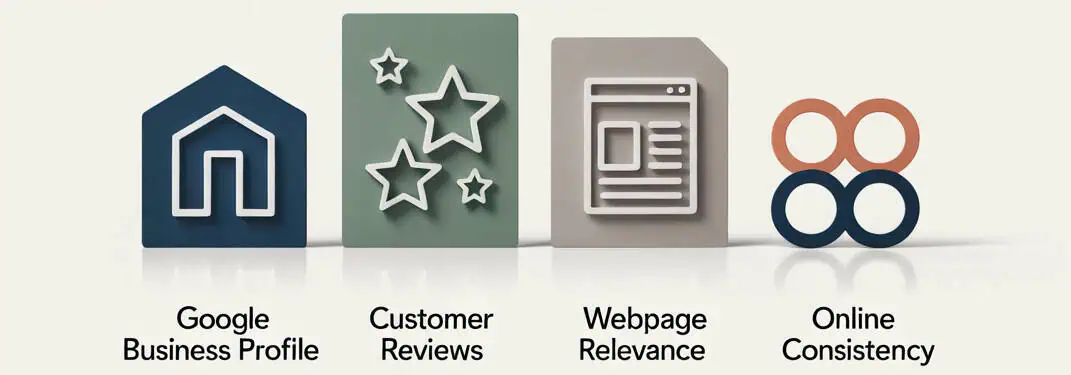
- The 4 Signals That Really Matter
- 1. Google Business Profile Health
- 2. Review Velocity & Quality
- 3. Website Relevance for Cities & Services
- 4. NAP & Citation Consistency
- What Local SEO Can and Cannot Do
- How Long It Actually Takes
- Why Many Contractors “Tried SEO” and Got Burned
- Red flag 1: Generic “do everything” agencies
- Red flag 2: Guaranteed rankings
- Red flag 3: No transparency
- Red flag 4: Obsession with vanity metrics
- When DIY Works (and When It Doesn’t)
- What It Actually Costs
- Start With Clarity: What’s Actually Broken?
- FAQs
Local SEO in Plain English
If you run a pool, patio, or landscaping business, you’ve heard “You need to do SEO” more times than you can count. Simple in theory. Messy in reality.
Local SEO is not one task like “claim your Google profile” or “post blogs.” It’s how clearly you answer four questions for Google and your customers:
When those answers are obvious and consistent, visibility follows. When they are fuzzy or conflicting, rankings wobble, no matter how much you are paying an “SEO expert.”
The 4 Signals That Really Matter
Dozens of tactics float around in SEO land, but for pool and landscape contractors, four controllable areas usually drive the majority of real‑world results. Proximity and competition still matter a lot, but these are the levers you can actually pull.
1. Google Business Profile Health
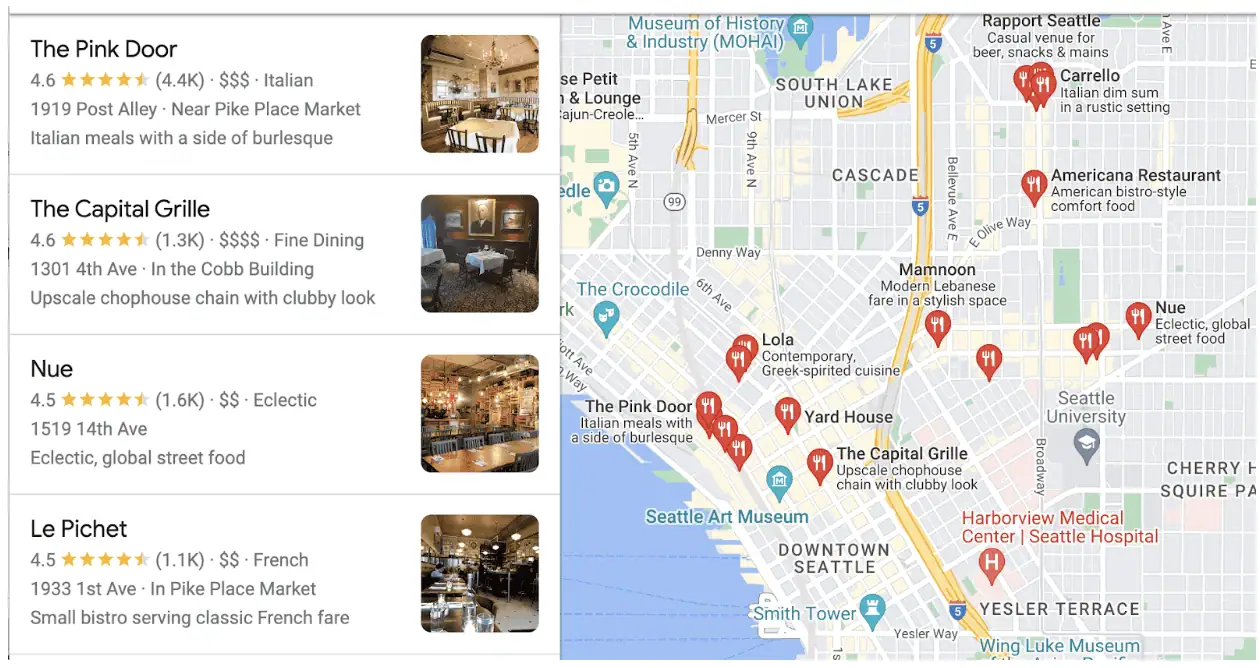
Your GBP is your digital storefront and your Map Pack ticket for searches like “pool builder near me” or “pool service [your city].” In most local studies, profile relevance and engagement are among the strongest factors after proximity and reviews.
What strong profiles usually have:
What weak profiles look like:
Minimum commitment: 30–45 minutes weekly for posts, photos, review responses, and Q&A. Treat GBP like a living asset, not a one‑time checklist item.
2. Review Velocity & Quality
Reviews are both social proof and a powerful local ranking factor. Many recent analyses show review volume, recency, and content are decisive once you are within range on proximity.
What Google tends to care about:
A practical review system:
You don’t need dozens of new reviews a month to see impact; even a few consistent, detailed reviews can move the needle in moderate‑competition markets.
3. Website Relevance for Cities & Services
A beautiful website that doesn’t align with how people search, or with what your GBP says, won’t carry much weight. Local algorithms look for on‑page signals that match service and location.
What Google and customers need to see:
What doesn’t work well:
Examples that help:
- yourcompany.com/pool‑remodel‑[city]
- yourcompany.com/pool‑service‑[city]
- yourcompany.com/landscape‑design‑[city]
Each should clearly speak to that service in that city, with photos, FAQs, and proof.
4. NAP & Citation Consistency
NAP = Name, Address, Phone number. Google cross‑checks this across your website, GBP, Facebook, Yelp, industry directories, and data aggregators. Consistency reinforces that your business is real and stable.
Common issues that cause confusion:
Simple rule: pick one exact name, address, and primary phone format, and use it everywhere.
Citations alone rarely move rankings much, but messy citations can hold you back or contribute to instability, especially when combined with other issues.
What Local SEO Can and Cannot Do
Setting expectations upfront keeps you out of “SEO disappointment” territory.
Local SEO can:
Local SEO cannot:
No legitimate agency can guarantee a specific ranking (like “#1 in 30 days”), because algorithms shift, competitors adapt, and searcher location changes results. What can be guaranteed: sound implementation, consistent activity, transparent reporting, and honest communication.
How Long It Actually Takes
Local SEO is a compounding channel, not a quick promotion.
Typical timelines for contractors who execute consistently:
- 1–3 months: Early movement
- More impressions in Maps and organic
- Some keyword ranking improvements and occasional Map Pack appearances
- 3–6 months: Meaningful traction
- Noticeably higher visibility in target cities
- More calls, forms, and quote requests coming from organic and GBP
- 6–12+ months: Strong positioning
- Stable Map Pack presence for core services in core cities
- Organic leads that feel predictable month to month
What speeds things up:
What slows things down:
Why Many Contractors “Tried SEO” and Got Burned
Most bad SEO experiences trace back to misalignment, not the channel itself.
Red flag 1: Generic “do everything” agencies
They treat you like an e‑commerce site, chase national rankings, and focus on volume blogging instead of GBP, reviews, and city pages. Ask: “How many pool or landscape contractors are you actively working with right now?”
Look for instead:
Red flag 2: Guaranteed rankings
“We’ll get you to #1 in 60 days” sounds great and usually relies on shortcuts that backfire or target meaningless keywords. Nobody controls Google’s algorithm or proximity.
Look for instead:
Red flag 3: No transparency
“It’s technical, you wouldn’t understand” is a sign you’re being kept in the dark. You should own all logins and be able to see what’s being done in your name.
Look for instead:
Red flag 4: Obsession with vanity metrics
“You’re #3 for ‘outdoor living solutions provider’!” is meaningless if nobody searches that phrase.
Track instead:
When DIY Works (and When It Doesn’t)
DIY local SEO can work extremely well in the right conditions.
DIY is usually a good fit if:
DIY is risky if:
Often, the best model is hybrid:
This keeps costs manageable while still moving fast and avoiding common mistakes.
What It Actually Costs
There’s a wide range, but here’s how many contractor‑focused campaigns are structured.
Typical investment ranges:
- DIY toolkit:
- $50–$200/month in tools (rank tracking, citation management, review platform)
- 5–10 hours of your own time
- Local SEO agency (no ads):
- Roughly $1,500–$4,000/month for GBP, reviews, website optimization, citations, and reporting, depending on market size and scope
- Full‑service growth partner (SEO + ads + content):
- Roughly $3,000–$6,000+/month when you add paid media and deeper content/consulting
A simple scenario for a $1M contractor investing $2,000/month:
Use scenarios like this as planning tools, not promises.
Start With Clarity: What’s Actually Broken?
Before throwing money at “SEO,” figure out where your visibility is breaking down today.
Most contractors fall into one of a few patterns:
- Strong GBP, weak website
- You appear in the Map Pack around your shop but not in organic results or nearby cities.
- Fix: Build out city and service pages and align them with your GBP.
- Decent rankings, no reviews
- You show up, but prospects choose competitors with better reputations.
- Fix: Implement a simple, consistent review system and respond to every review.
- Everything looks “fine,” rankings are still poor
- Often hidden citation issues, category problems, or technical website issues are holding you back.
- Fix: Get a professional local audit that looks at GBP, site structure, citations, and tracking.
Frequently Asked Questions (FAQ)
How long does it take to see results from local SEO?
Most businesses see early movement in 1–3 months, meaningful gains in 3–6 months, and stronger, more stable visibility after 6–12 months of consistent work. Highly competitive markets or “from scratch” situations can take longer.
Can I do local SEO myself or do I need an agency?
DIY can work if you have 5–10 hours a month, enjoy learning, and your revenue is still under the point where your time is more valuable in the field or in sales. If you are already maxed out or your market is competitive, a hybrid (you handle reviews/photos, a specialist handles the technical pieces) is often the sweet spot.
What’s the difference between Google Business Profile and local SEO?
Your GBP is one very important piece of local SEO, but it’s not the whole picture. Full local SEO includes GBP optimization, reviews, website content and structure, citations, and ongoing monitoring and adjustment. Focusing only on GBP usually leads to early wins that eventually plateau.
Why do my rankings fluctuate?
Fluctuations come from competitors changing their profiles, new reviews, algorithm updates, seasonal behavior, and the fact that different searchers see different results depending on where they are. Day‑to‑day volatility is normal; long‑term downward trends signal real issues.
How much should I spend on local SEO?
A common pattern:
- Under $500K revenue: DIY or very light help with $50–$200/month in tools.
- $500K–$1M: Often $1,500–$2,500/month with a specialist makes sense.
- $1M–$2M+: $2,500–$4,000/month or more if you want to grow aggressively and layer in paid media.
Run the math: if 2–3 additional good projects per year cover the investment, it is usually worth testing for at least 6–12 months.
Should I focus on blogging?
Blogging helps after the foundations are in place. It works best when you:
- Answer specific questions your prospects actually ask
- Target local long‑tail keywords and seasonal topics
- Tie posts back to service and city pages with internal links
If GBP, reviews, and basic site structure are weak, fix those first. Blogging on top of weak foundations is a common way to spend money without seeing much return.
Want Clarity on Your Local Visibility?
If you are not sure whether your bottleneck is GBP, reviews, website structure, or citations, a short, focused audit can save months of guesswork.
In about 20 minutes, you can:
- See exactly where your local visibility is breaking down
- Understand which signals are strong and which are weak
- Decide whether DIY, hybrid, or full service makes the most sense for your size
Ready to see what’s really holding back your Maps and local search presence?

About the Author
Pam Haskell is the founder of Pool & Patio Digital, a marketing agency dedicated to helping pool builders and landscape professionals win more local leads online. With over a decade of experience in outdoor living and digital strategy, Pam is a member of the Pool & Hot Tub Alliance (PHTA) and writes regularly on local SEO for service businesses.
Connect on LinkedIn | Read Featured Articles in Top Industry Publications